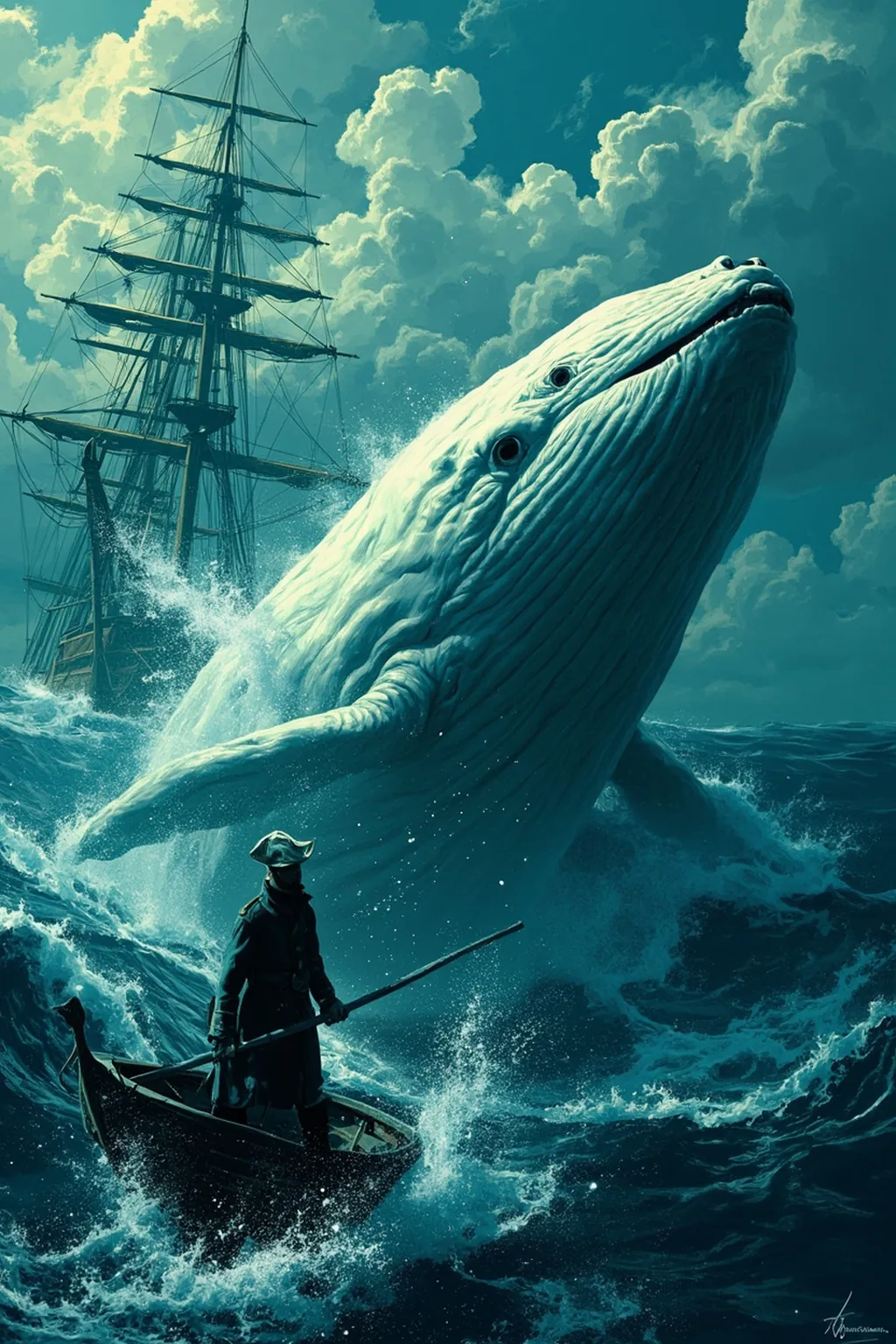
CHAPITRE 42. The Whiteness of the Whale.
This chapter is a reflective, philosophical exploration of the whiteness of Moby Dick, probing why the color white—despite its widespread cross-cultural associations with beauty, nobility, divinity, and joy—carries an inherent, almost ineffable dread when divorced from those positive connotations, particularly as it relates to the white whale that haunts both Captain Ahab and the narrator. This chapter, titled The Whiteness of the Whale, explores the paradoxical, multifaceted power of whiteness, examining its dual role as a symbol of divine spirituality and a trigger for primal, cosmic terror, alongside its connections to animal instinct, the structure of visible and invisible existence, and the deceptive nature of earthly color.
CHAPITRE 42. The Whiteness of the Whale.
This chapter is a reflective, philosophical exploration of the whiteness of Moby Dick, probing why the color white—despite its widespread cross-cultural associations with beauty, nobility, divinity, and joy—carries an inherent, almost ineffable dread when divorced from those positive connotations, particularly as it relates to the white whale that haunts both Captain Ahab and the narrator.
Unsaid Reflections on the White Whale’s Meaning
The narrator opens by noting that while Ahab’s all-consuming obsession with the white whale has been previously detailed, his own complex, often nameless horror of the whale’s whiteness has remained unspoken. He feels compelled to attempt to articulate this terror to give meaning and purpose to the preceding chapters of his account.
The Whale’s Whiteness as the Core of Dread
The narrator identifies the whale’s whiteness as the primary, overwhelming source of his dread of Moby Dick, a fear that surpasses even more obvious, tangible threats the whale poses. He sets out to unpack this seemingly paradoxical reaction to a color so widely tied to positive, exalted concepts, acknowledging the difficulty of putting this ineffable horror into comprehensible terms.
Positive Cultural and Symbolic Meanings of Whiteness
The narrator first catalogs the extensive positive cultural and symbolic associations of whiteness across global human societies: it enhances beauty in natural objects like marble, flowers, and pearls; signals royal and imperial power (from the “Lord of the White Elephants” of Pegu to the white charger on the Austrian imperial standard, and the white elephant standard of Siam); is tied to ideas of joy (Roman white stones marking festive days), innocence (bridal attire), honor (the white wampum belt of North American Indigenous nations), justice (judicial ermine), and divine purity (Persian fire worship, Christian liturgical vestments, the white throne and robes in the Book of Revelation, and the sacred white dog sacrifice of the Iroquois), among many other noble and sublime connotations.
Whiteness Amplifying Terror in Fearsome Creatures
The narrator argues that when whiteness is stripped of its positive associations and paired with objects that are inherently terrifying, it intensifies that terror to an extreme, almost unbearable degree. He uses the white polar bear and white shark as examples: their smooth, pale whiteness gives them a ghastly, mild, unnatural quality that makes them more frightening than fiercer, darker beasts like the heraldic tiger, as it creates a jarring, unsettling contrast between an appearance of innocence and their lethal, ferocious nature.
The Mystical Spell of the White Albatross
The narrator recounts his personal experience seeing an albatross during a prolonged storm in Antarctic waters, describing its unspotted whiteness and vast, archangel-like wings as a regal, supernatural sight that filled him with profound awe and a sense of encountering the divine, far more powerful than any prior cultural associations with the bird. He asserts that the bird’s whiteness is the core of the mystical spell it casts, even more so than the literary fame of Coleridge’s poem about the albatross, noting that he had never heard of the poem or known the bird was an albatross at the time of his encounter, yet was still deeply moved by its pale, spectral presence.
Legend of the White Steed of the Prairies
The narrator references the legendary White Steed of the Prairies, a majestic milk-white wild horse that led vast herds across the pre-settlement North American west, revered by trappers and hunters as a divine, archangelic figure tied to the glory of primeval, unfallen nature. Its whiteness was the source of both its commanding, worship-inspiring presence and the nameless terror it evoked in those who beheld it, as it seemed to embody a power beyond mortal understanding.
The original text of this work is in the public domain. This page focuses on a guided summary article, reading notes, selected quotes, and visual learning materials for educational purposes.