Choosing the Role of a Simple Sailor
Ishmael clarifies that he always goes to sea “as a simple sailor, right before the mast, plumb down into the forecastle,” rather than as a passenger, captain, or cook. Being a passenger requires money and leads to discomfort, while commanding positions bring unwanted responsibility and “honorable respectable toils.” Though he admits there is “considerable glory” in being a cook, he never fancied that occupation. As a common sailor, he submits to the orders of sea-captains who “thump and punch” him about, but he finds satisfaction in knowing “it is all right”—that everyone is “served in much the same way.” He values the “wholesome exercise and pure air of the fore-castle deck” and the dignity of being paid for his labor, observing that “there is all the difference in the world between paying and being paid.” He draws wisdom from Stoic philosophy to endure the indignities of his rank, ultimately accepting the “universal thump” that passes through all humanity.
The Grand Programme of a Whaling Voyage
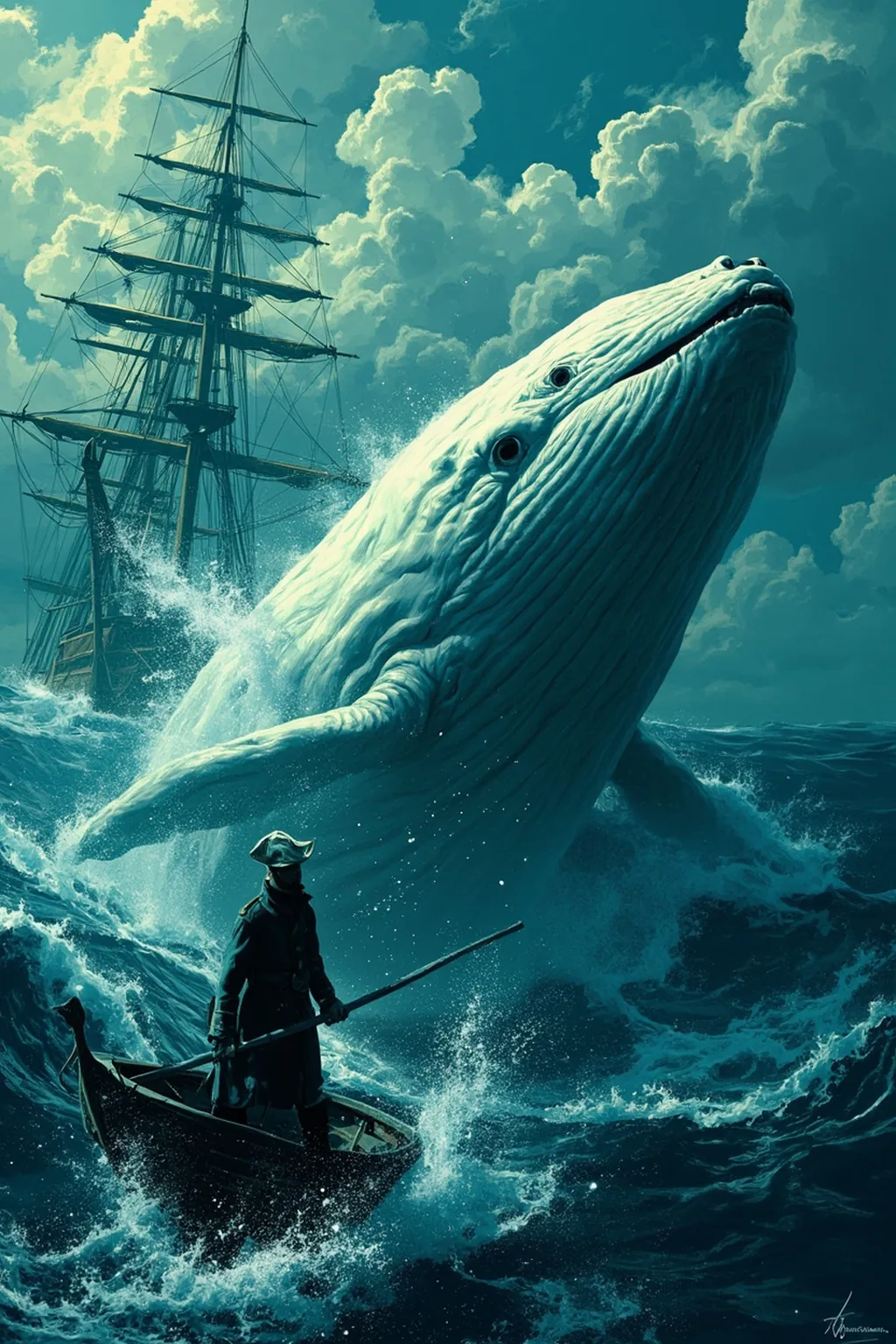
The chapter concludes with Ishmael’s explanation of why he specifically chose a whaling voyage, suggesting it was part of a grand “programme of Providence” drawn up by the Fates. While others were cast for “magnificent parts in high tragedies” or “jolly parts in farces,” he was assigned the “shabby part of a whaling voyage.” Ishmael believes the Fates secretly influenced him, presenting motives “under various disguises” while making him believe it was “a choice resulting from my own unbiased freewill.” Chief among these inducements was “the overwhelming idea of the great whale himself”—a “portentous and mysterious monster” whose “undeliverable, nameless perils” captivated him. The wild seas, the attending marvels, and an “everlasting itch for things remote” all swayed him toward this dangerous voyage, opening the “great flood-gates of the wonder-world” where “endless processions of the whale” floated into his soul, culminating in the image of one “grand hooded phantom, like a snow hill in the air.”
The original text of this work is in the public domain. This page offers a compressed quick-read summary for educational purposes.