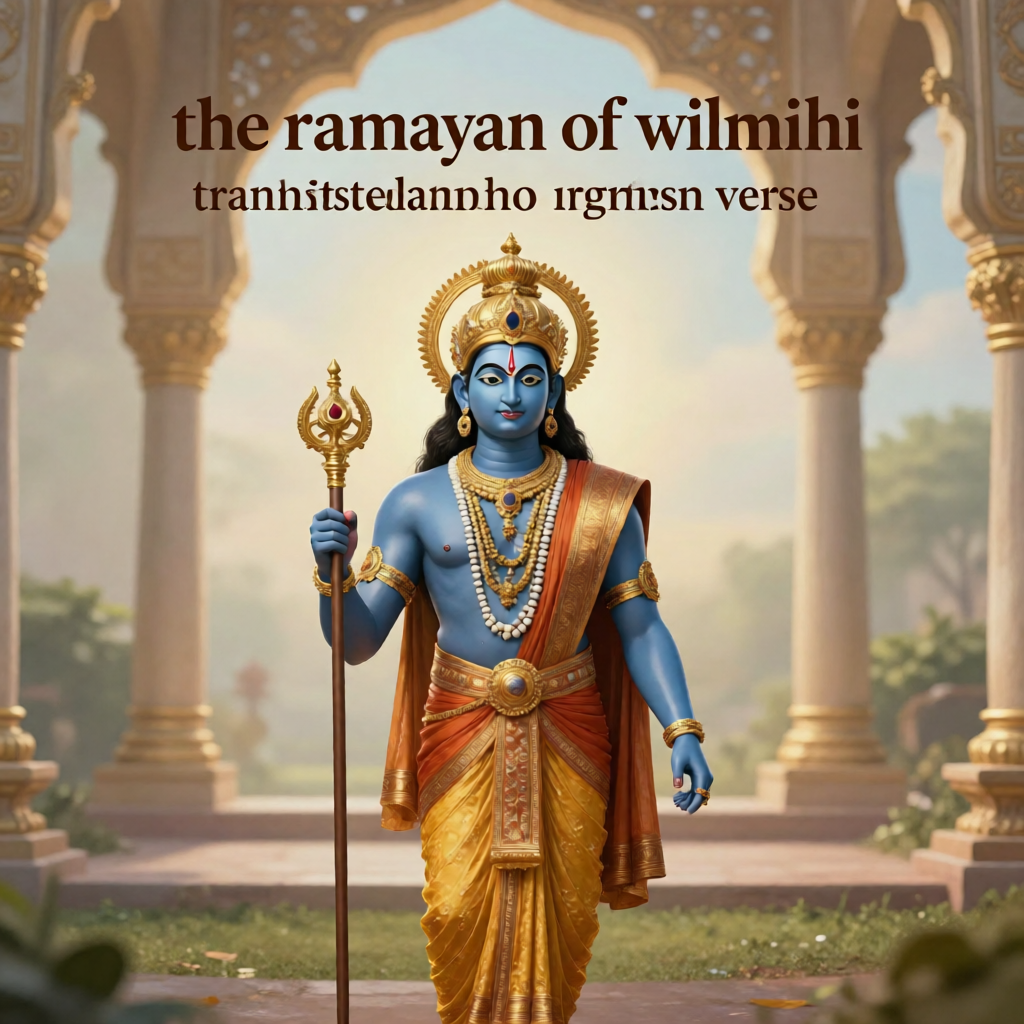
The Slaying of Bali and the Restoration of Sugriva
In Cantos XVI through XVIII the narrative turns from the lush melancholy of the Pampá riverbanks to a violent reckoning on the sunlit ground of Kishkindha. Bali, the Vánar king, lies dying in a forest hollow, and around him the rhythms of heroism give way to the slow unfolding of a royal death, where grief and duty intertwine beneath the canopy. His dying words entrust his son Ángada to the victor’s care, and the passage from grief to guilt to philosophical acceptance to the restoration of legitimate rule occupies four successive cantos, with Tara’s lament and Sugríva’s consolation braided into a single sustained meditation upon the price of kingship.
The Great Mobilization and the Search for Sita
After the solemn rite restores Sugríva to his throne, the months appointed for his promised aid melt into autumn while the Vánar king lies lapped in wine and dalliance, and Ráma’s patience at last runs dry. A moment of terrible misunderstanding nearly shatters the fragile alliance when Sugríva fails to respond, but the breach is healed and the great mobilization begins. King Sugríva divides the monkey host into four vast armies and dispatches them to the cardinal quarters, and the search for Sítá gathers a mounting urgency that blends martial determination with something closer to pilgrimage. The southern host squanders its allotted month and faces a punishment that may exceed its deserts, until the aged vulture-king Sampáti completes his long vigil upon Mount Vindhya and reveals the path that leads to Lanká.
Hanuman’s Journey to Lanka and the Finding of Sita
The central movement of the fourth book follows Hanúmán, the Vánar chieftain, as he infiltrates the inner sanctum of Lanká in search of the lost queen. His journey traces an arc through increasingly intimate spaces of the demon city, culminating in a breathtaking leap into the Aśoka grove where Sítá endures her captivity. Across ten cantos the enchanted garden becomes the stage for the epic’s central crisis, as the demoness brood of Rávana’s court threatens the captive queen with dismemberment and demands she accept their king as husband, and Sítá answers with a defiance that burns through every torment. Hanúmán presents himself before her with proofs of her lord’s affection, offering Ráma’s ring and the gold circlet he was wont to wear, and the lady weeps at the sight. From triumphant warrior through bound captive to liberator wreathed in flame, the son of the Wind God traverses a single fevered crescendo, until at last he stands amid the smoldering ruins of Lanká and confronts the moral cost of his own wrath.
The March to the Sea and the Wrath Against the Ocean
In this segment of the Rámáyan the narrative expands across two realms at once: the joyous, thunderous march of the Vánar host toward the southern sea, and the troubled councils held within the golden walls of Lanká. On the shore where the legions have halted, Vibhishaṇ descends from the sky, bright as a thunderbolt and towering like Meru’s peak, the Rákshas prince come to pledge himself to Ráma’s cause. The prince’s wrath then erupts against the unyielding Ocean, whose refusal to permit a passage threatens to derail the entire campaign, and the imagery opens with an image of cosmic violence as the very waters tremble before the hero’s consecrated arrow.
The Siege of Lanka and the Slaying of Ravana
The besieging army is at last disclosed in its full martial splendor, and Rávana responds with an act of magical cruelty aimed at breaking the captive queen’s spirit. From the heights of Suvela’s peak Ráma and Sugríva gaze down upon the island city of Trikúṭa, marveling at its grandeur, built by the celestial architect Viśvakarmá, and the great war that follows is a meditation upon grief, loyalty, and the fragile boundary between victory and defeat. As the siege reaches its fevered pitch, battle follows battle in inexorable cascade, and the Vánar forces systematically dismantle Rávana’s proudest champions. The slumbering giant Kumbhakarṇa is awakened to shatter the besieging host, and the tide of battle swings violently between the opposing forces until at last Ráma stands over the fallen Rávana, the king of Lanká struck down in single combat and his chariot shattered by arrows as precise as divine judgment. Yet instead of pressing his advantage, Ráma restrains himself, his moral architecture intact even in the moment of supreme triumph.
The Triumph at Lanka and the Journey Home
The closing cantos of the fourth book bend at last toward homecoming, but the resolution carries a price. Even after slaying the demon king, the rites must be performed and the sorrow must be honored, and the sequence opens not in triumph but in ritual lamentation. The triumph at Lanká yields to reconciliation, divine favor, and the long-anticipated journey home, with the celestial Pushpaka vimána carrying the victors across the vast arc of the Indian subcontinent. Hanúmán descends before Bharata with tidings that the exile is at an end, and the canto opens on the banks of a sacred river where the long arc of sorrow bends at last toward consecration.
The Divine Council and the Resolution of the Sacred Story
In the celestial realm where the threads of mortal and divine destiny are woven together, a great council gathers to address the growing menace that Rávana’s unchecked power once posed to all three worlds. Led by Indra, the gods ascended to Brahmá to lodge their grievance against the rakshasa tyrant, and the exalted lord of creation turned the threads of fate toward a single resolution. The fourth book traces the legendary conquests of the demon and turns at last to the sorrowful final chapters of Ráma’s life, with the banished Sítá bringing forth two royal children in the quiet of the sage’s hermitage, solitude transformed into blessing, and the question of what, if anything, of the epic is historically true giving way at last to the deeper truth of its devotion. Across its vast compass of cosmic genesis, royal domesticity, heroic exile, demonic war, and ultimate homecoming, the Rámáyan of Válmíki, rendered here into English verse, moves from the celestial song of Nárad to the final consecration of the prince upon his throne, every thread drawn at last into the gleaming sea of sacred story.
The original text of this work is in the public domain. This page focuses on a guided summary article, reading notes, selected quotes, and visual learning materials for educational purposes.